







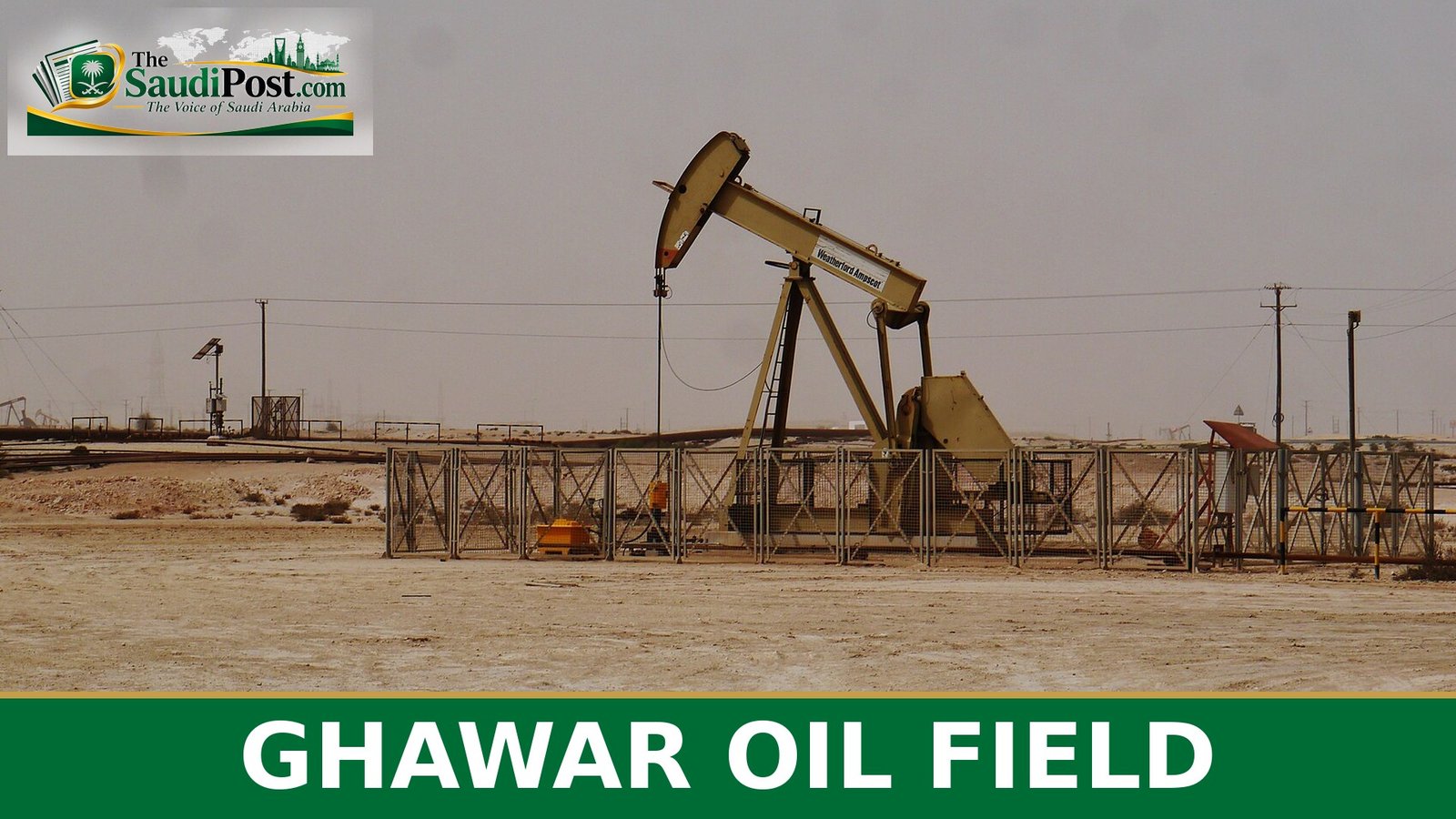
Ghawar is the largest conventional oil field in the world. It lies under the desert of the Eastern Province, about 280 kilometres long and around 30 kilometres wide, and it has supplied roughly a third of all the oil Saudi Arabia has ever produced.
This guide explains what Ghawar is, how it was found, how it works, and why it still matters after more than 75 years of production.
| Quick Facts — Ghawar Oil Field | |
|---|---|
| Location | Al-Ahsa Governorate, Eastern Province, Saudi Arabia |
| Discovered | 1948 — discovery well ‘Ain Dar 1; production started 1951 |
| Size | About 280 km long and around 30 km wide; roughly 8,400 sq km |
| Rank | World’s largest conventional onshore oil field |
| Reservoir | Upper Jurassic Arab-D limestone, about 7,000 ft deep |
| Production capacity | Around 5 million barrels a day |
| Cumulative production | More than 55 billion barrels (AAPG); roughly a third of Saudi cumulative output |
| Operator | Saudi Aramco |
How Ghawar Was Found
Ghawar was found by reading the desert surface. In the early 1940s, geologists Max Steineke, Thomas Barger and Ernie Berg noticed a bend in the Wadi Al-Sahbah, a dry riverbed that crosses the Eastern Province. The bend hinted at a huge buried structure.
Berg spent the 1940 field season mapping the ground around the Abqaiq field, which was already being drilled. His surface mapping pointed to a long, north-trending fold in the rock — an anticline — that could trap oil on an enormous scale.
The discovery well, ‘Ain Dar 1, was drilled in the northern part of the structure. It struck oil in 1948. The southern end followed soon after: Haradh was found in 1949, and oil was confirmed at Fazran, the northern tip, in 1957.
Aramco’s own history calls the discovery an “educated hunch”. It was a hunch built on years of patient fieldwork — walking the desert, mapping rock outcrops, and drilling shallow holes to trace the shape of the rock below.
How Big Is Ghawar?
Ghawar is hard to picture, because it is so long and narrow. It runs about 280 kilometres from north to south — roughly the distance from Riyadh to Qassim — and around 30 kilometres wide. Its area is about 8,400 square kilometres.
One comparison helps. At 174 miles long, Ghawar is about 70% of the north-south distance across Louisiana, the American state. Another way to see it: the field is so large that Aramco divides it into six named producing areas.
Exact figures vary slightly by source. The AAPG anatomy of the field gives 280 by 26 kilometres, while other references say 250 by 30 kilometres. The differences come from where each source draws the field’s edges, not from any doubt about its scale.
Nothing else on land comes close. Ghawar is by far the largest conventional oil field in the world, and it accounts for roughly a third of Saudi Arabia’s cumulative oil production as of 2018.

The Six Areas of Ghawar
From north to south, Ghawar’s six main producing areas are Fazran, ‘Ain Dar, Shedgum, Uthmaniyah, Haradh and Hawiyah. Each has its own wells, its own gas oil separation plant, and its own character.
‘Ain Dar, in the north, is where it all began. Shedgum and Uthmaniyah are the workhorses of the middle section, with the big processing plants. Haradh, in the south, was developed later and is known for its large gas handling.
Hawiyah is the southernmost area, and it also hosts a major gas plant. Together, the six areas function as one field, but they are operated almost like six fields sharing a single reservoir.
The reservoir itself is a layer of Upper Jurassic limestone called the Arab-D. It sits about 7,000 feet below the surface. The rock is porous and permeable, which is why the wells flow so easily and why the field has produced for so long.
How Ghawar Produces So Much Oil
Ghawar’s production capacity is around 5 million barrels a day. That is more than most oil-producing countries manage in total. The field has produced more than 55 billion barrels since 1951, and estimates of what remains often cite around 70 billion barrels.
The secret is water. Since 1965, Aramco has injected water around the edges of the field to push oil toward the producing wells and keep the reservoir pressure up. This is called peripheral water injection, and Ghawar runs one of the largest such systems in the world.
The system works, but it needs constant care. As the field ages, more water comes up with the oil, and Aramco has to separate and handle it. The company also drills new wells, including horizontal wells, to reach oil that older wells cannot.
Actual daily output from Ghawar is not published regularly. Figures from the 2019 IPO suggested output closer to 3.8 million barrels a day, below the 5 million capacity. The gap is normal: capacity is what the field can do, not what it does every day.
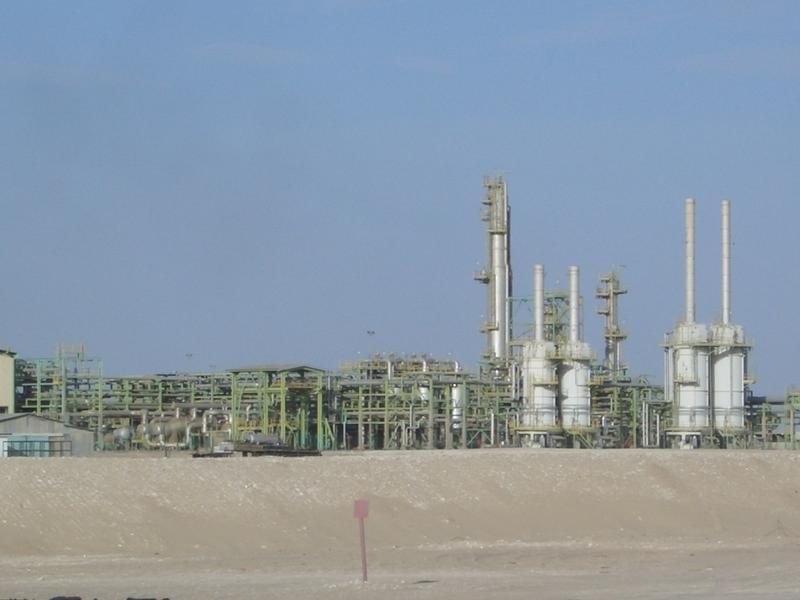
Ghawar and the World’s Oil Supply
Ghawar is often called the largest single supplier of primary energy on Earth. That is not an exaggeration: no other single field has produced as much oil, and none has carried a country’s economy for as long.
The field is the backbone of Saudi Arabia’s role in world oil markets. It gives the Kingdom the spare capacity to raise output when other suppliers fail, and the reserves to keep producing for decades. Our pillar guide to oil and gas in Saudi Arabia explains how Ghawar fits into the national picture.
Ghawar also anchors the Eastern Province. The towns of the region — Dhahran, Dammam and Khobar — grew up around Aramco and its fields. Our guide to places to visit in Dammam and Khobar covers the area for visitors.
The field’s offshore cousin is just as remarkable. Safaniya, in the Arabian Gulf, is the world’s largest offshore oil field. Together, Ghawar and Safaniya are the two pillars of Saudi production.
Can You Visit Ghawar?
No. Ghawar is a restricted industrial area, closed to the public. There are no tours, no viewpoints and no visitor centre at the field itself. The wells, plants and pipelines sit behind Aramco security, far out in the desert.
The nearest most people get is the Al-Ahsa Oasis, a UNESCO World Heritage site at the northern end of the field’s region. The oasis, with its palm groves and springs, is open to visitors and shows the green side of the Eastern Province.
For the oil story itself, Ithra in Dhahran is the place to go. Its Energy Exhibit explains how oil is found and produced, with displays that are far more informative than staring at a distant wellhead would be.
If you want to work in the industry rather than visit it, our guide to Aramco jobs explains how to apply. The oil and gas companies in Saudi Arabia guide covers the employers, from Aramco to the service firms that keep fields like Ghawar running.
Frequently Asked Questions
Where is the Ghawar oil field?
Ghawar is in Al-Ahsa Governorate, in the Eastern Province of Saudi Arabia. It runs in a long strip from north to south, west of the Gulf coast and south-west of Dammam and Dhahran.
When was Ghawar discovered?
Ghawar was discovered in 1948, when the ‘Ain Dar 1 well struck oil in the northern part of the structure. Production started in 1951. The southern Haradh area was found in 1949.
How large is the Ghawar field?
About 280 kilometres long and around 30 kilometres wide, covering roughly 8,400 square kilometres. Exact figures vary slightly by source, because each draws the field’s edges a little differently.
How much oil has Ghawar produced?
More than 55 billion barrels since production began in 1951, according to AAPG figures. Estimates of remaining reserves are often put at around 70 billion barrels, though figures vary.
Is Ghawar running out of oil?
Not soon. The field has produced for over 70 years and still holds large reserves, but it is mature: more water comes up with the oil now, and Aramco uses water injection and new wells to keep it producing.