










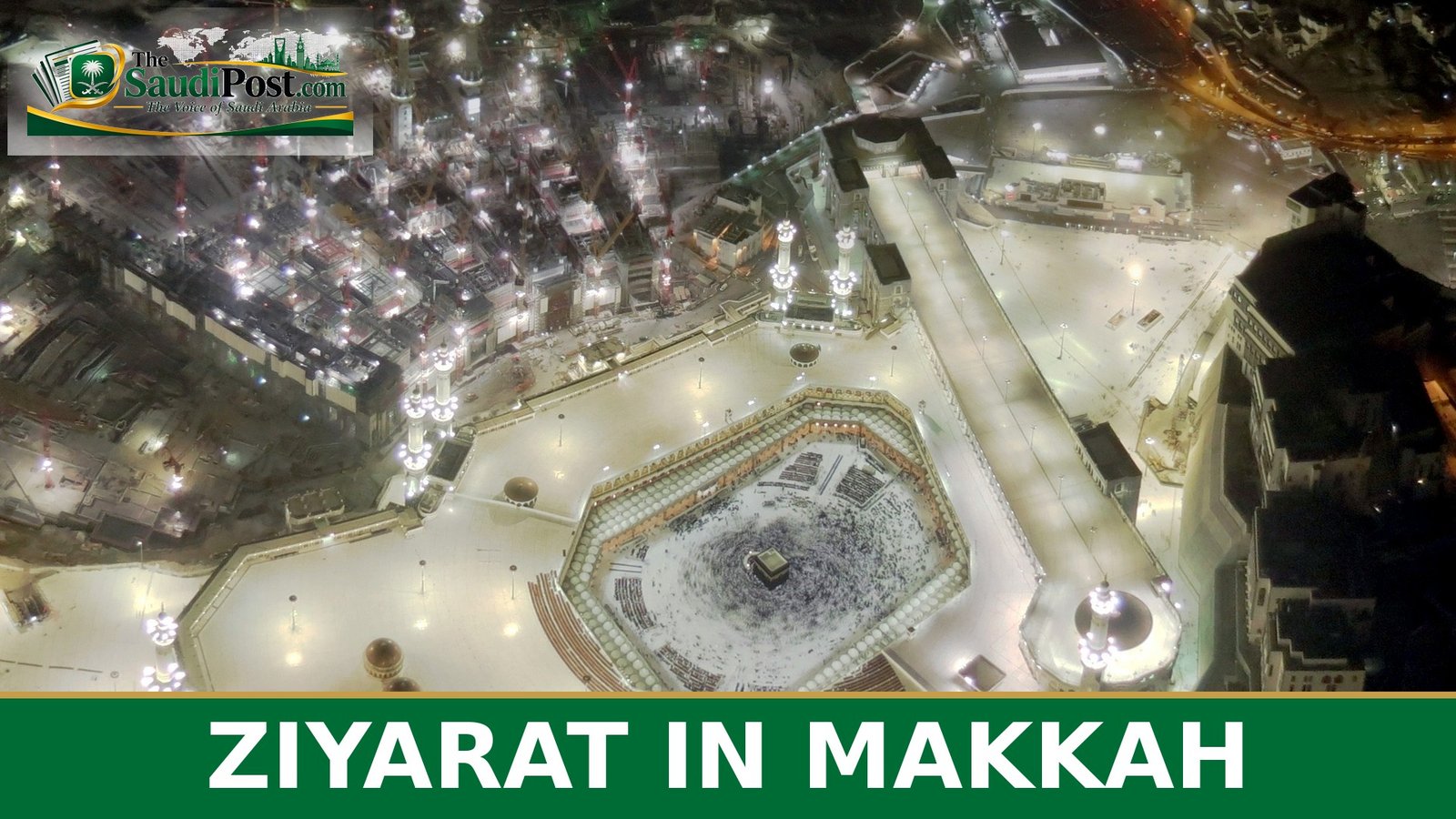
Every year, millions of Muslims arrive in Makkah for Umrah and Hajj — and almost all of them ask the same question once their rituals at Masjid al-Haram are done: which ziyarat places should we visit in Makkah?
Ziyarat (visiting the historic and sacred places) is how pilgrims connect the verses of the Quran and the stories of the Seerah to real ground they can stand on: the cave where the first revelation came down, the mountain that sheltered the Prophet ﷺ during the Hijrah, the plain where the Farewell Sermon was delivered.
This pillar guide brings together the eight essential Makkah ziyarat places — each with its own detailed guide on The Saudi Post. Whether you hire a taxi for one morning or spread the visits over several days, this is the complete list to work through.
| Quick Facts — Ziyarat in Makkah | |
|---|---|
| Area covered | Makkah city and the Mashair (Arafat, Mina, Muzdalifah) |
| Key places in this guide | 8 — Cave Hira, Jabal al Noor, Jabal Thawr, Arafat, Mina & Muzdalifah, Jannat al Mualla, Masjid al Jinn, Jabal al Rahmah |
| Starting point | Masjid al-Haram — most city ziyarat sit within about 1–8 km of it |
| Best way to cover them | Hired taxi or a guided ziyarat tour (one morning for the city sites) |
| Best time to visit | Early morning, just after Fajr — cooler and far less crowded |
The 8 Essential Ziyarat Places in Makkah
1. Cave Hira — where the Quran began
High on Jabal al Noor sits the small Cave Hira, where the Prophet Muhammad ﷺ received the first revelation — the opening verses of Surah Al-Alaq — from the angel Jibreel in around 610 CE.
The cave itself is tiny, barely 3.7 metres long, but no ziyarat in Makkah carries more weight. The climb takes between half an hour and a few hours depending on fitness and crowds.
2. Jabal al Noor — the Mountain of Light
Jabal al Noor is the 642-metre mountain that houses Cave Hira. Its name — the Mountain of Light — comes from the light of revelation that descended on it.
Most visitors combine the mountain and the cave in a single trip: a taxi to the base, then roughly 1,750 steps to the summit area.
3. Jabal Thawr — the mountain of the Hijrah
South of Makkah rises Jabal Thawr, whose cave sheltered the Prophet ﷺ and Abu Bakr (RA) for three nights as they escaped the Quraysh during the Hijrah to Madinah — the event the Quran recalls in Surah At-Tawbah (9:40).
The climb is steeper and quieter than Hira, and the story attached to it is one of the most loved in the Seerah.
4. The Plain of Arafat — the heart of Hajj
About 20 km southeast of Makkah lies the Plain of Arafat, where pilgrims gather on the 9th of Dhul Hijjah for the wuquf — the standing that is the very essence of Hajj — and where the Prophet ﷺ delivered his Farewell Sermon.
Outside the Hajj days, Umrah pilgrims visit to see Masjid Namirah and the famous hill at its centre.
5. Mina and Muzdalifah — the Hajj valley and the open plain
Mina, the “City of Tents” with more than 100,000 air-conditioned tents, hosts pilgrims for the days of stoning at the Jamarat. Next door, Muzdalifah is the open plain where pilgrims spend the night under the sky after Arafat and collect their pebbles.
Together they form the working heart of the Hajj journey.
6. Jannat al Mualla — Makkah’s historic cemetery
A short walk north of the Haram, Jannat al Mualla is the ancient cemetery of Makkah. Here rest Khadijah bint Khuwaylid (RA), the Prophet’s ﷺ first wife; his grandfather Abdul Muttalib; his uncle Abu Talib; and his sons Qasim and Abdullah.
The graves today are unmarked, and visitors pay their respects quietly from the designated areas.
7. Masjid al Jinn — where the jinn heard the Quran
Close to Jannat al Mualla stands Masjid al Jinn, built on the site associated with the night a group of jinn listened to the Prophet’s ﷺ recitation of the Quran and believed — the event described in Surah Al-Jinn (72:1) and Surah Al-Ahqaf (46:29).
It is a working neighbourhood mosque and an easy add-on to the cemetery visit.
8. Jabal al Rahmah — the Mount of Mercy
At the centre of the Arafat plain stands the 70-metre hill of Jabal al Rahmah, the Mount of Mercy, topped by a white pillar.
Tradition holds it as the meeting place of Adam and Hawwa (Eve) on earth, and pilgrims on the Day of Arafat fill its slopes — though standing anywhere within Arafat fulfils the rite.
How to Plan Your Makkah Ziyarat
Group the city sites together. Jannat al Mualla and Masjid al Jinn sit minutes apart, and both are an easy walk or short taxi ride from the Haram.
Jabal al Noor (for Cave Hira) and Jabal Thawr each need their own trip — ideally on separate early mornings, because both involve serious climbing in the heat.
Taxis and tours.
The most common way pilgrims do ziyarat is to hire a taxi for a set round of the city sites; visitors on forums such as TripAdvisor’s Mecca forum report paying roughly SAR 130–150 for a full ziyarat round, though prices move with season and demand, so agree the fare and the stops before you set off.
Hotel desks and Umrah operators also run guided ziyarat tours, which suit first-time visitors who want the stories explained as they go.
Arafat, Mina and Muzdalifah are usually shown as a separate drive-out trip. Outside the Hajj season the roads are open and the sites are quiet; during Hajj itself, access to the Mashair is restricted to pilgrims performing the rites.
Timing matters. Start just after Fajr. By mid-morning the Makkah sun makes the Hira and Thawr climbs punishing, and the popular sites fill with tour groups. Carry water, wear firm footwear for the mountains, and keep the Haram as your anchor — every ziyarat trip starts and ends there.
Good Manners at the Ziyarat Places
These are places of history and reflection, not ritual stations: visiting them is recommended for learning and remembrance, but they are not rites of Umrah or Hajj, and no specific worship is prescribed at any of them.
Keep voices low at Jannat al Mualla, do not touch or mark graves, take your litter away from the mountains, and follow the instructions of the staff on duty at each site.
Frequently Asked Questions
How can we do ziyarat in Makkah on our own?
Very easily. Hire a taxi near the Haram and agree a round of the main sites — Jannat al Mualla, Masjid al Jinn, Jabal al Noor and Jabal Thawr — or book a guided ziyarat tour through your hotel.
Visitors commonly report paying around SAR 130–150 for a taxi round; always fix the price and the list of stops before the trip starts.
Is ziyarat part of the Umrah rituals?
No. Ziyarat places are historic sites visited for learning and reflection. They are recommended and beloved, but they are not rites of Umrah or Hajj, and visiting them is not a condition for either pilgrimage to be valid.
How many days do I need for Makkah ziyarat?
The city sites fit into one morning by taxi. Add a second early morning if you want to climb to Cave Hira at a relaxed pace, and a separate short trip for Arafat, Mina and Muzdalifah. Most Umrah visitors with three days in Makkah can comfortably cover all eight places in this guide.
What is the best time of day to visit?
Straight after Fajr. The climbs up Jabal al Noor and Jabal Thawr are far easier in the cool of the early morning, the sites are quieter, and you are back at the Haram well before the midday heat.
Can women visit the Makkah ziyarat places?
Yes — women visit all of these sites, including the mountain climbs and Masjid al Jinn at prayer times. At Jannat al Mualla, all visitors follow the cemetery’s rules and view respectfully from the permitted areas.

5 thoughts on “Ziyarat in Makkah: The Complete Guide to the Holy Places to Visit”
Comments are closed.