









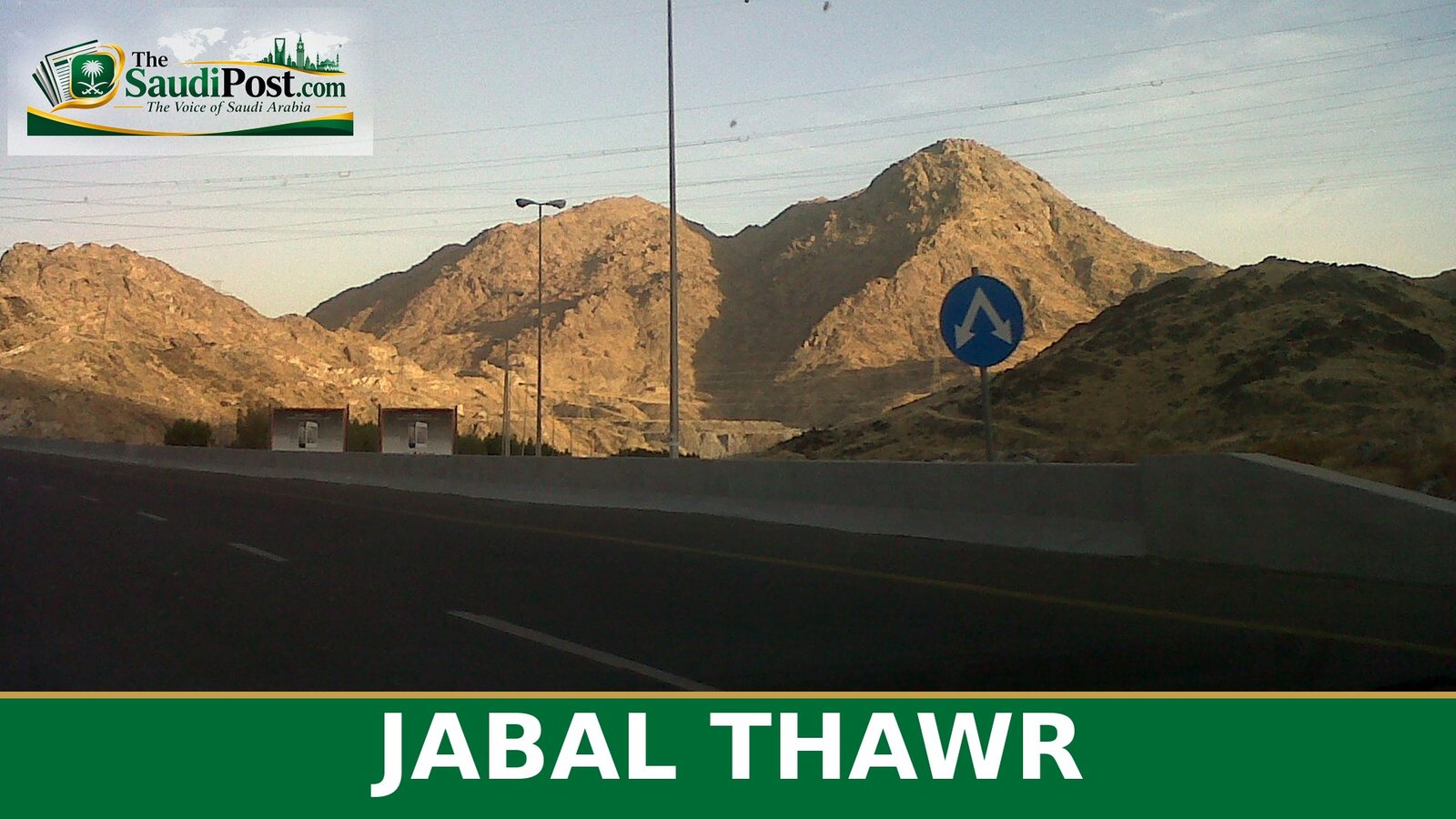
Every schoolchild who hears the story of the Hijrah remembers the cave.
Pursued by the Quraysh, the Prophet Muhammad ﷺ and Abu Bakr (RA) hid for three nights in a cave on Jabal Thawr, south of Makkah — in the opposite direction from Madinah — while search parties scoured the mountains around them.
The Quran preserves the moment forever: “…when they were in the cave, and he said to his companion: Do not grieve; indeed, Allah is with us” (Quran 9:40). For many pilgrims, the climb up Jabal Thawr is the most moving ziyarat in Makkah precisely because it is the hardest.
| Quick Facts — Jabal Thawr | |
|---|---|
| Location | South of Makkah, beyond the Misfalah district |
| Distance from Masjid al-Haram | About 5 km to the south |
| Height | 750 metres (2,460 ft) |
| Famous for | Cave Thawr — the three-night refuge during the Hijrah (622 CE) |
| The climb | Steep and rough — roughly 1–2 hours for most visitors; far less developed than Jabal al Noor |
| Best time to visit | Early morning; avoid the midday heat completely |
The Story of Cave Thawr
When the Quraysh plotted to kill the Prophet ﷺ, Allah commanded him to migrate.
Leaving Ali (RA) in his bed to foil the watchers, he slipped to the house of Abu Bakr (RA), and the two men left Makkah by night — heading south, away from the Madinah road, to mislead any pursuit. On Jabal Thawr they sheltered in a small cave near the summit.
For three nights the cave was their world.
Abu Bakr’s son Abdullah spent each day in Makkah listening to the Quraysh’s plans and reported them after dark; his daughter Asma (RA) carried food up the mountain — tearing her own waistband to tie the provisions, which earned her the title Dhat al-Nitaqayn, “she of the two belts”.
Their servant Amir ibn Fuhayrah grazed sheep over the tracks to erase them. When a search party reached the very mouth of the cave, Abu Bakr whispered his fear — and the Prophet ﷺ answered with the words the Quran recorded: “Do not grieve; indeed, Allah is with us.”
A much-loved account in the seerah literature adds that a spider had spun its web and a dove nested across the entrance, turning the searchers away.
On the fourth day, with the search fading, the two men took the coastal route to Madinah — and the Hijrah, year one of the Islamic calendar, had begun.
The Quraysh had put a price on that escape: a hundred camels for whoever brought back the Prophet ﷺ or Abu Bakr (RA), dead or alive — a fortune that sent trackers across the desert.
The most famous of them, Suraqa ibn Malik, caught up with the travellers on the coastal road and found his horse sinking into the sand each time he closed in, until he begged for safety and turned back.
The cave on Thawr is where that whole chase turned: three nights of stillness in a rock hollow, while an empire of searchers passed by below.


Visiting Jabal Thawr Today
Taxis from the Haram head south through Misfalah to the base of the mountain. From there, be ready for a different experience from Jabal al Noor: the path up Thawr is steeper, rougher and far less commercial — fewer steps, fewer vendors, fewer crowds.
Most visitors need one to two hours to reach the cave, and the descent over loose rock demands care.
The cave itself is a hollow beneath a great rock with openings on two sides; visitors squeeze in briefly and come out — there is room for very few at a time.
Many pilgrims choose simply to climb partway, or to view the mountain from below and reflect on the story, especially in hot months. That is a perfectly good ziyarat: like all the sites in our Ziyarat in Makkah guide, Thawr is a place of history and remembrance, not a prescribed rite.
Practical Tips
Go at Fajr or not at all in summer — the southern slopes catch the sun early and there is little shade. Wear hiking shoes, carry more water than you think you need, and do not attempt the upper section in sandals or in the dark without a torch and a companion.
Mobile signal is patchy near the summit, so agree the return trip with your taxi driver before you climb. Many pilgrims pair Thawr with Cave Hira on the following morning — together, the two climbs cover the two great mountain stories of the Seerah: the first revelation, and the great escape.
Related Guides
- Mount Arafat and the Plain of Arafat: The Heart of Hajj
- Mina and Muzdalifah: The Tent City and the Night Under the Stars
- Jannat al Mualla: Who Is Buried in Makkah’s Historic Cemetery?
- Masjid al Jinn: The Mosque Where the Jinn Heard the Quran
- Jabal al Rahmah: The Mount of Mercy at Arafat — Visitor Guide
Frequently Asked Questions
What happened at Jabal Thawr?
During the Hijrah of 622 CE, the Prophet Muhammad ﷺ and Abu Bakr (RA) sheltered in Cave Thawr on this mountain for three nights while the Quraysh searched for them. The event is recalled in the Quran (9:40), including the Prophet’s ﷺ words to Abu Bakr: “Do not grieve; indeed, Allah is with us.”
How long did the Prophet ﷺ stay in Cave Thawr?
Three nights. During those days, Abu Bakr’s (RA) son Abdullah brought news from Makkah each night, his daughter Asma (RA) brought food, and their servant Amir ibn Fuhayrah covered their tracks with his sheep. The party then left for Madinah by a coastal route.
How high is Jabal Thawr?
Jabal Thawr is 750 metres (2,460 ft) high — taller than Jabal al Noor — and stands south of Makkah’s Misfalah district, about 5 km from Masjid al-Haram.
Is the Jabal Thawr climb harder than Jabal al Noor?
Yes. The route up Jabal al Noor is a built stairway of around 1,750 steps; the Thawr path is steeper, rougher and less developed, with loose rock near the top. Allow 1–2 hours, wear proper shoes, and climb only in the cool early morning.
What does the Quran say about Cave Thawr?
Surah At-Tawbah (9:40) describes Allah’s help to His Prophet “when those who disbelieved had driven him out, and he was the second of two, when they were in the cave” — and records his words to his companion: “Do not grieve; indeed, Allah is with us.” The companion in the cave was Abu Bakr (RA).