










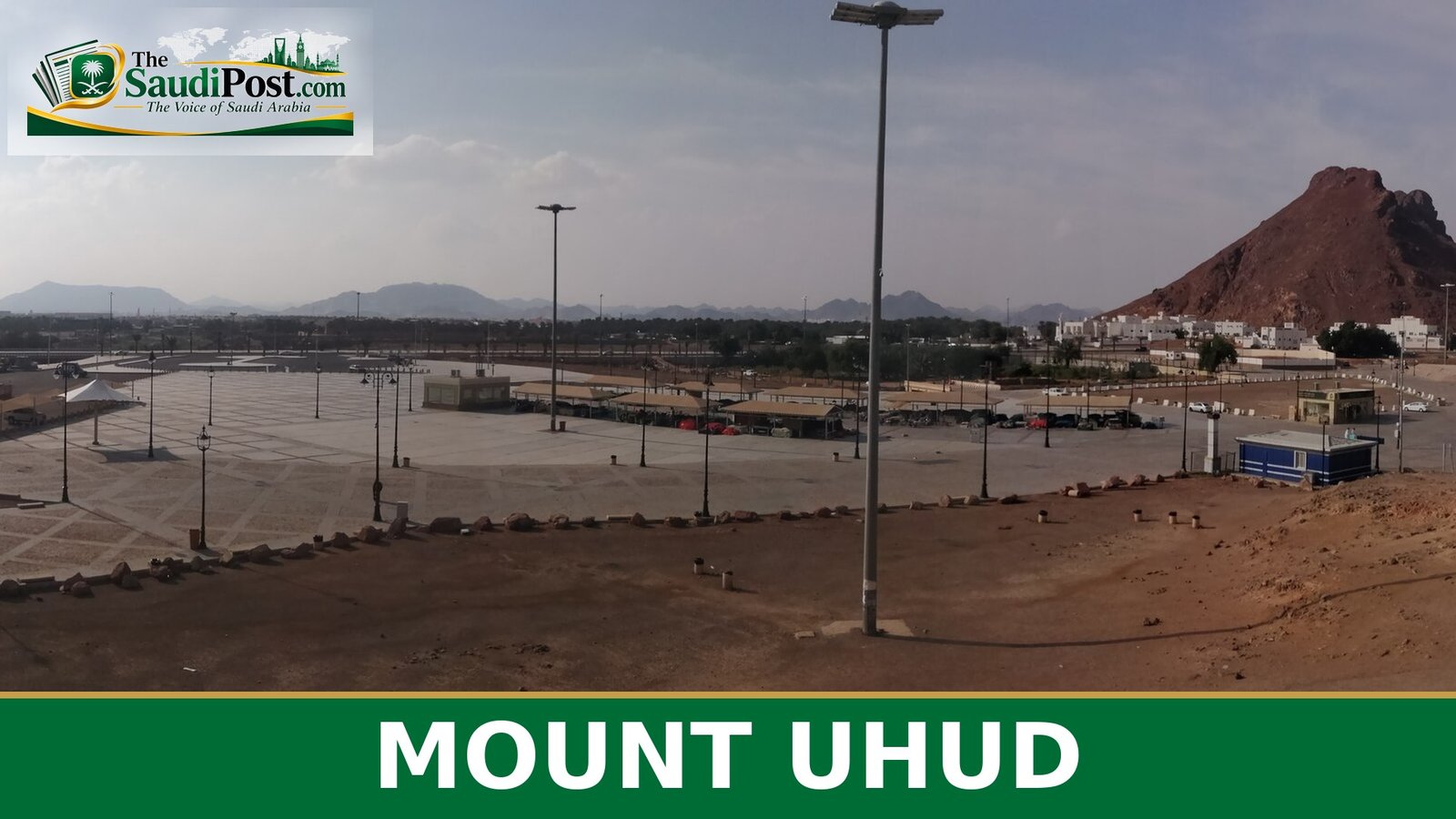
No visit to Madinah is complete until you have stood at the foot of Mount Uhud.
The long, reddish ridge that closes the city’s northern horizon is not just Madinah’s largest mountain — it is the mountain of the second great battle of Islam, the resting place of seventy martyrs, and a mountain of which the Prophet Muhammad ﷺ said words he said of no other: “Uhud is a mountain that loves us, and we love it” (Bukhari and Muslim).
Most pilgrims find the Martyrs’ Cemetery at its base the most emotional stop of the entire Madinah ziyarat. This guide covers the Mount Uhud story, what to see, and how to visit.
| Quick Facts — Mount Uhud | |
|---|---|
| Location | Northern Madinah, at the Sayyid al-Shuhada district |
| Distance from Masjid al-Nabawi | About 5 km north — 10–15 minutes by car |
| Size | About 1,077 m high and 7.5 km long — the largest mountain in Madinah |
| Historical event | The Battle of Uhud, Shawwal 3 AH (625 CE) |
| Key sites | Martyrs’ Cemetery (incl. Hamza RA) · Archers’ Hill (Jabal al-Rumah) · Sayyid al-Shuhada Mosque |
| Entry | Free — open area, visited at all hours; early morning is best |
What Is Special About Mount Uhud?
Three things make Uhud unlike any other mountain. First, the Prophet’s ﷺ love for it: when its ridge came into view on his return journeys, he would say, “This is Uhud — a mountain that loves us and we love it.”
Second, the battle fought beneath it in 3 AH, where the young Muslim community came closest to destruction and lost seventy of its finest, including the Prophet’s ﷺ own uncle.
And third, the graves: those seventy martyrs were buried where they fell, at the mountain’s foot, and the Prophet ﷺ used to visit them and greet them for the rest of his life. To stand at Uhud is to stand inside the Seerah, not just beside it.
The Mount Uhud Story: The Battle of 3 AH
A year after their defeat at Badr, the Quraysh of Makkah returned with an army of about 3,000 to avenge their dead. The Muslims, around 700 after a group of hypocrites withdrew, met them on the plain beneath Uhud on a Saturday in Shawwal 3 AH.
The Prophet ﷺ set fifty archers on a small hill — Jabal al-Rumah, the Archers’ Hill — under Abdullah ibn Jubayr (RA), with a strict order: do not leave your position, whatever happens.
The battle first went the Muslims’ way, and the Quraysh line broke. Seeing the enemy flee, most of the archers left the hill to gather spoils, despite their commander’s reminder.
Through the gap they left, the Quraysh cavalry under Khalid ibn al-Walid — not yet a Muslim — swept around and fell on the Muslims from behind. The day turned.
A cry went up that the Prophet ﷺ had been killed; he had in fact been wounded, his tooth broken and his face cut, and was carried to shelter in a ravine of the mountain.
Seventy Companions were martyred holding the ground around him — Hamza (RA), killed by the spear of Wahshi; Mus’ab ibn Umayr (RA), the standard-bearer; Hanzalah (RA), the bridegroom of one night, among them.
The Quran’s verses on Uhud (Surah Aal-e-Imran) turn the defeat into a permanent lesson about obedience: the archers’ hill you can still climb is where the lesson happened.
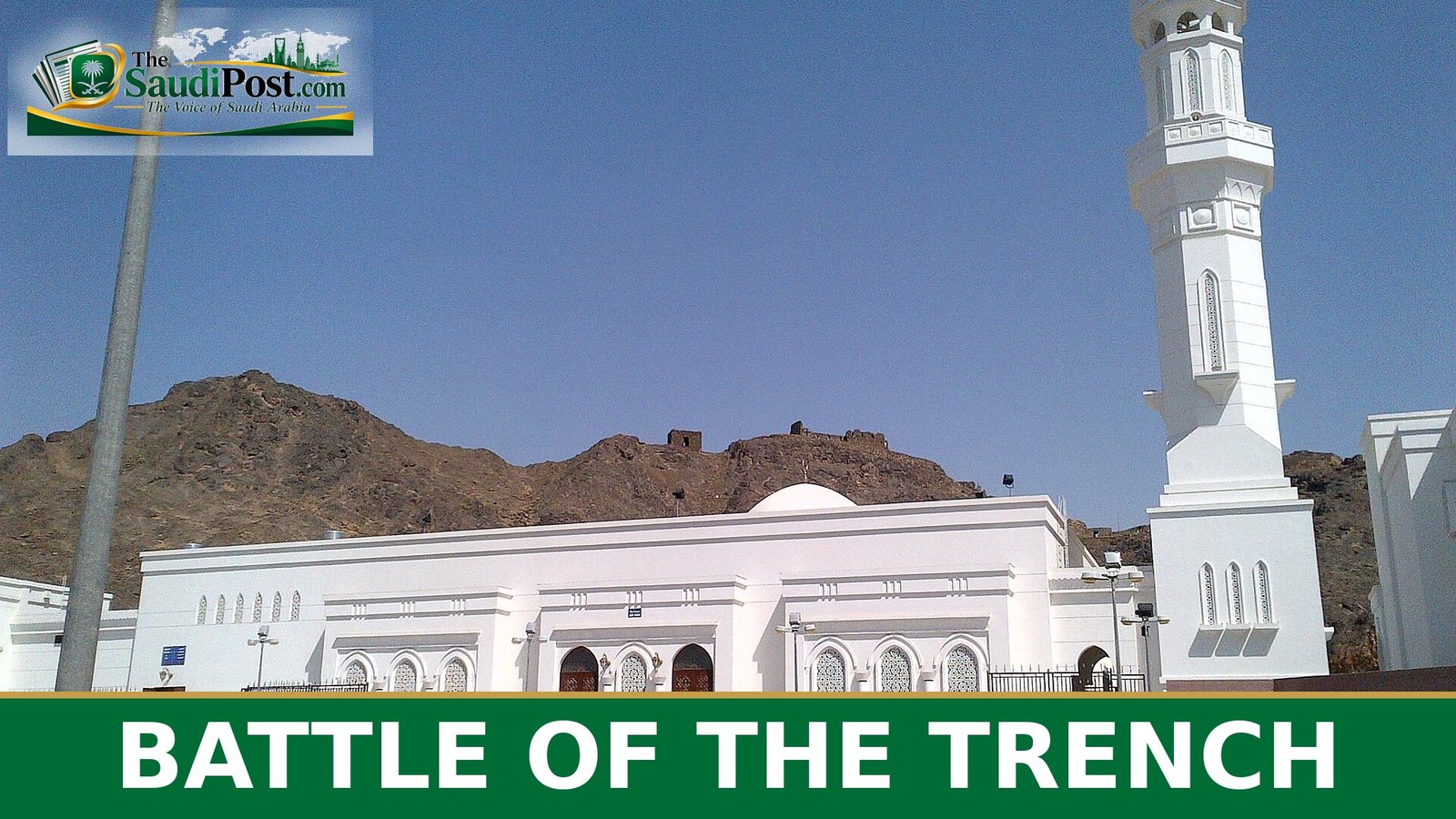
Two years later the community faced an even greater army at the Battle of the Trench — and this time, the lesson of Uhud held.
Who Is Buried at Mount Uhud?
At the foot of the mountain, in an enclosed graveyard on the battlefield itself, lie the seventy martyrs of Uhud.
The most visited grave is that of Hamza ibn Abd al-Muttalib (RA) — the Prophet’s ﷺ uncle, titled Sayyid al-Shuhada, the Master of Martyrs — buried together with his nephew Abdullah ibn Jahsh (RA). Around them rest Mus’ab ibn Umayr (RA), Hanzalah ibn Abi Amir (RA) and the rest of the seventy.
The Prophet ﷺ visited these graves often and taught his followers to greet their occupants with salam and dua.
Visitors today stand at the cemetery fence, give salam to the martyrs, and pray for them — entering among the graves is not permitted, and there is nothing to touch or take; the visit is one of remembrance.
Beside the cemetery stands the large Sayyid al-Shuhada Mosque, opened in 2017, where most ziyarat groups pray before moving on.
Can We Climb Mount Uhud?
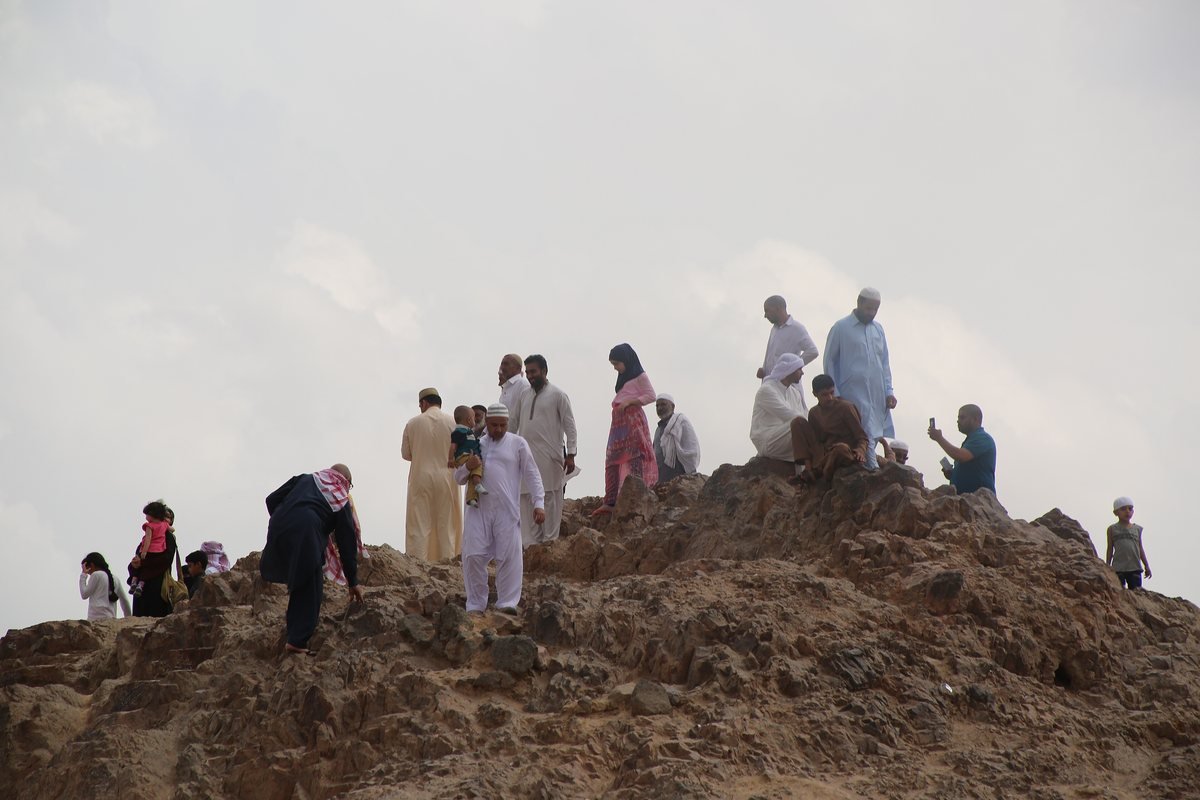
The climb every visitor makes is not the great mountain but the small one: Jabal al-Rumah, the Archers’ Hill, a rocky mound about 500 metres south of the main ridge.
It is a short, easy scramble of a few minutes, and from its top the whole battlefield explains itself — the plain, the cemetery, and the mountain wall behind.
Climbing the main peak of Uhud itself is a different matter: it is a long, rugged hike of hours, not part of the ziyarat, and not something pilgrim tours arrange; the meaningful visit is all at the base.
Also at the base, guides point out Masjid al-Fasah, where the Prophet ﷺ is reported to have prayed after the battle, and a cave in the mountain’s face associated with his shelter that day — both are seen from outside, briefly, and best understood through the story rather than the stones.
Visiting Uhud: Practical Notes
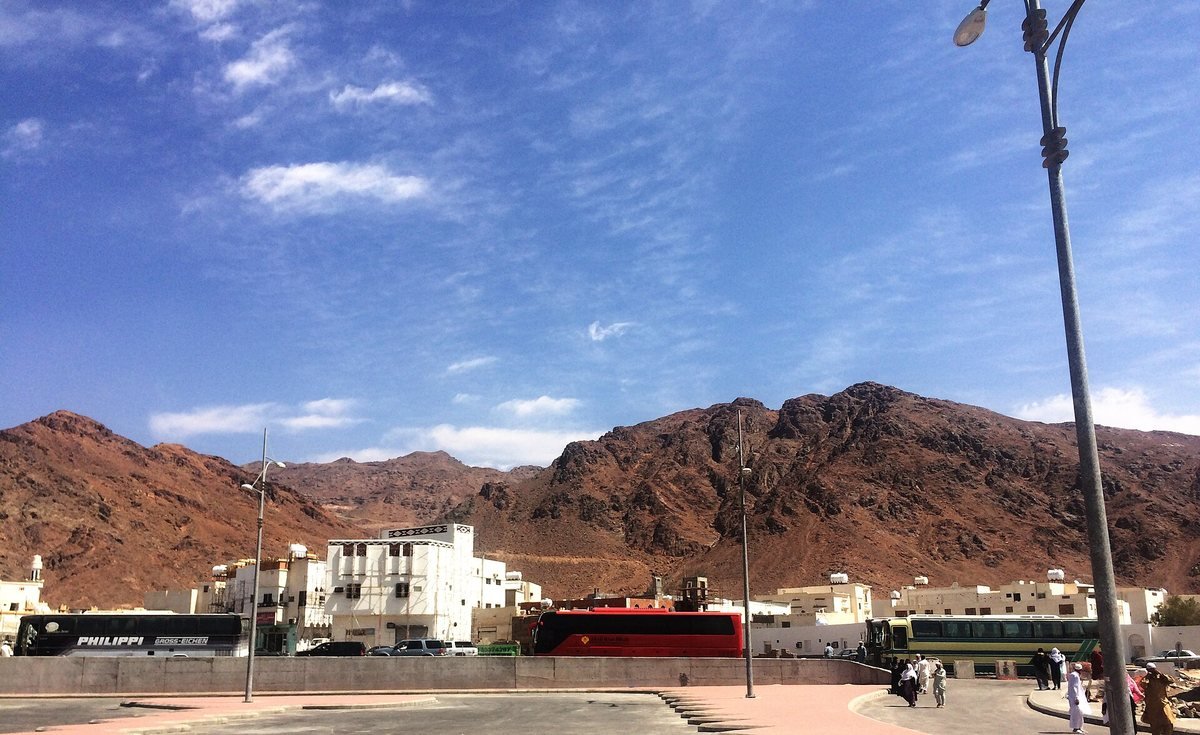
Uhud is about 5 km north of Masjid al-Nabawi and is the northern anchor of the round described in our Ziyarat in Madinah guide — most tours stop here for 30 to 45 minutes.
Come in the early morning if you can: the light on the red rock is beautiful, the plaza is calm, and the midday heat on the open plain is fierce. There is no shade at the cemetery or on the Archers’ Hill, so carry water and a hat.
As for what to recite at Mount Uhud: no specific dua is prescribed — greet the martyrs with salam as the Prophet ﷺ did, pray for them from the heart, and read or recall the verses of Aal-e-Imran on the battle. That, and standing quietly where Hamza (RA) fell, is the visit.
Related Guides
- Masjid Quba: The First Mosque in Islam and the Umrah Reward
- Masjid Qiblatain: The Mosque Where the Qibla Changed
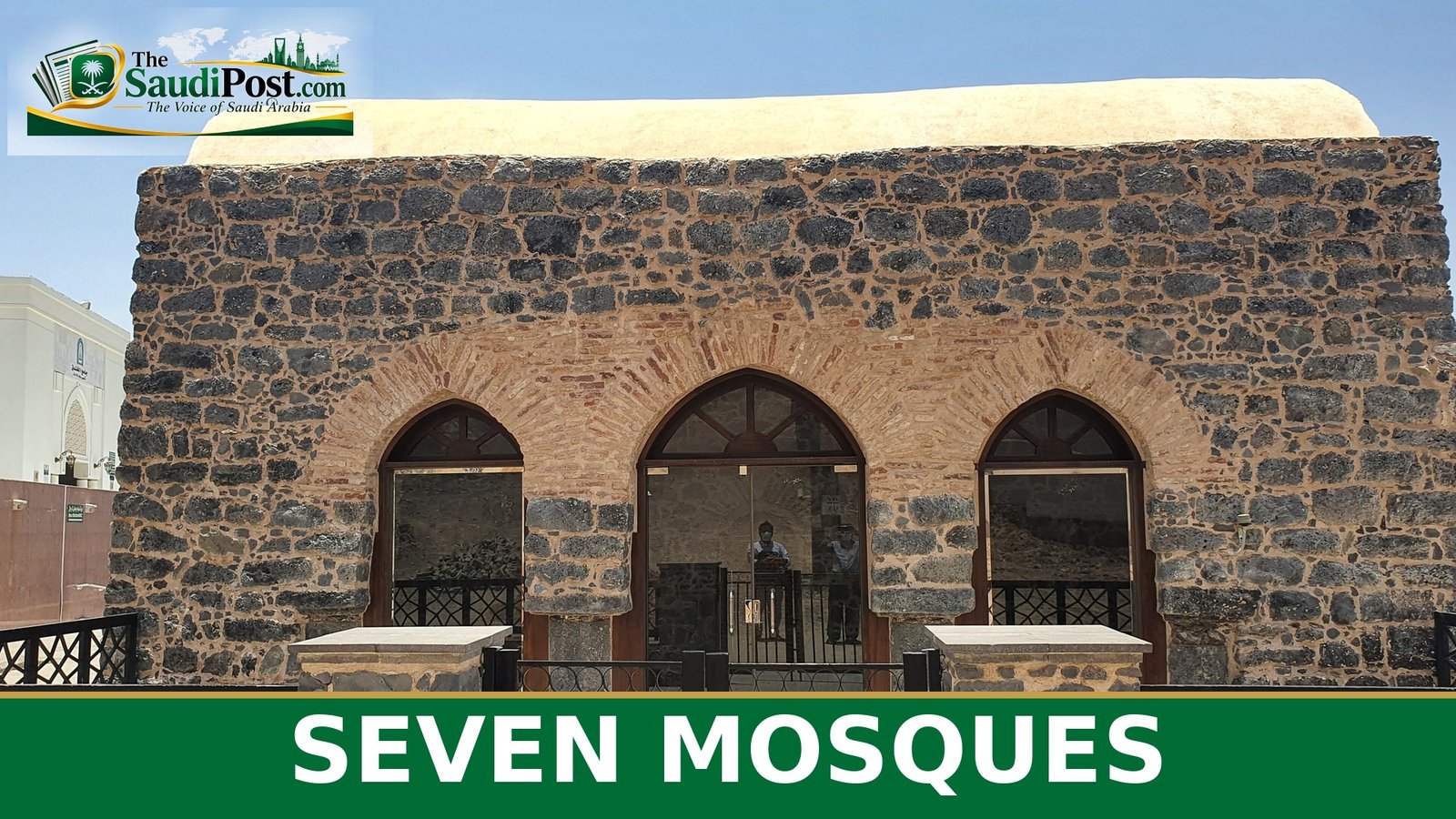
- The Seven Mosques of Madinah: Al-Masajid as-Sab’ah Explained
Frequently Asked Questions
What is special about Mount Uhud?
Mount Uhud is the site of the Battle of Uhud (3 AH), where seventy Companions — including Hamza (RA) — were martyred and buried at its foot. The Prophet ﷺ loved this mountain and said: “Uhud is a mountain that loves us, and we love it” (Bukhari and Muslim).
Who is buried at Mount Uhud?
The seventy martyrs of the Battle of Uhud, in the Martyrs’ Cemetery at the mountain’s foot. The best known are Hamza ibn Abd al-Muttalib (RA), the Prophet’s ﷺ uncle and Master of Martyrs; Mus’ab ibn Umayr (RA); Hanzalah (RA); and Abdullah ibn Jahsh (RA), who shares Hamza’s grave.
Can we climb Mount Uhud?
Visitors climb the small Archers’ Hill (Jabal al-Rumah) — an easy few minutes that gives the best view of the battlefield. Climbing the main peak of Uhud is a long, rugged hike, is not part of the ziyarat, and is not arranged by pilgrim tours; everything of significance is at the mountain’s base.
What to recite at Mount Uhud?
No fixed dua is prescribed. The Prophet ﷺ used to visit the martyrs of Uhud, greet them with salam and pray for them — visitors do the same, adding their own duas and reflecting on the verses of Surah Aal-e-Imran (chapter 3) that speak about the battle.
Where is Mount Uhud located?
Mount Uhud is in the north of Madinah, about 5 km from Masjid al-Nabawi — 10 to 15 minutes by car. It is the city’s largest mountain, about 1,077 metres high and 7.5 km long, and the martyrs’ cemetery and Archers’ Hill are at its southern foot.


One thought on “Mount Uhud: The Mountain That Loves Us — Battle, Martyrs and Visitor Guide”