









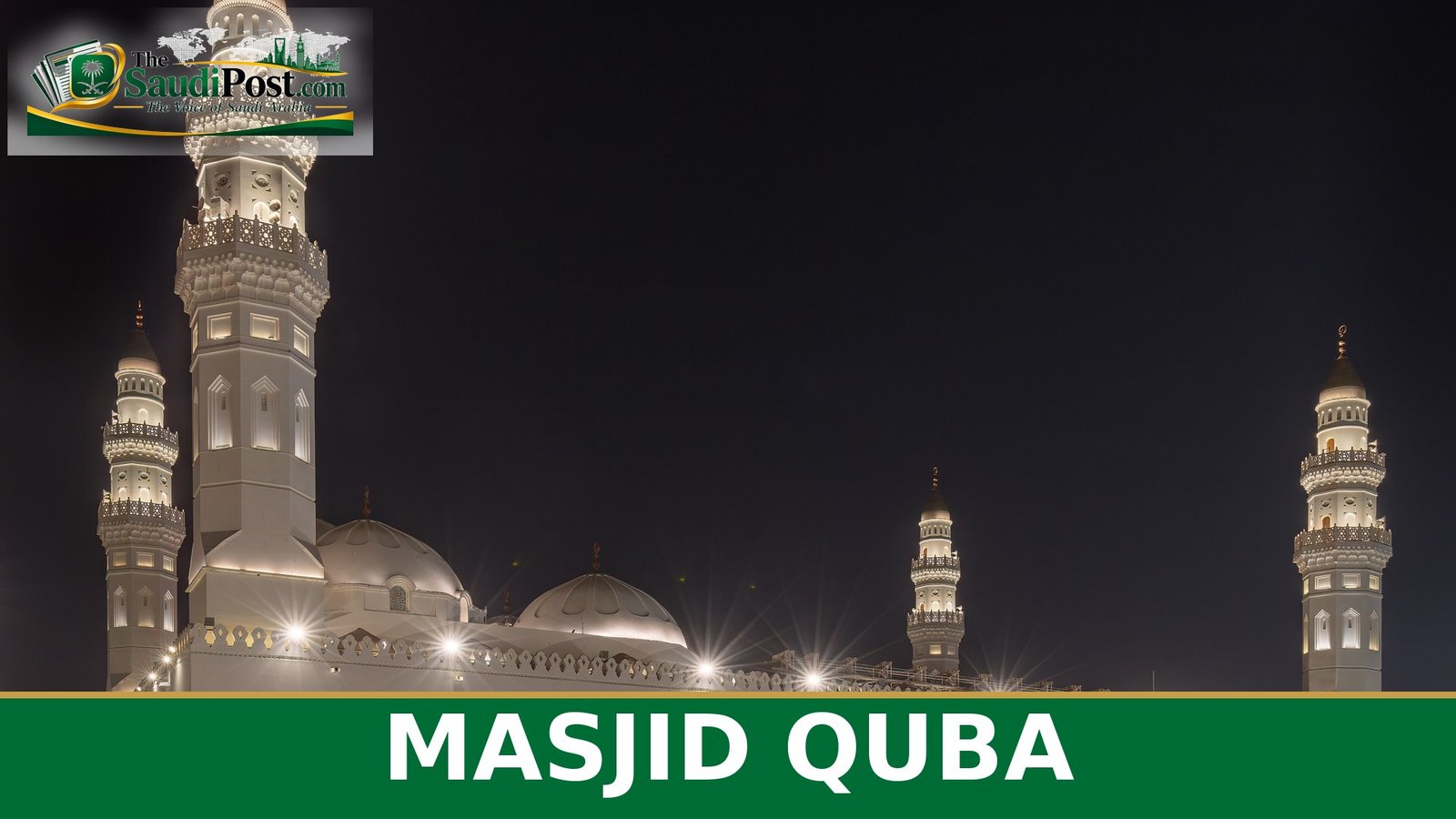
Every mosque on earth traces its beginning to this one. Masjid Quba, in the southern district of Madinah, is the first mosque built in Islam — founded in 622 CE on the very day the Prophet Muhammad ﷺ arrived from Makkah during the Hijrah.
It is also the only ziyarat site in Madinah where a specific act of worship is authentically rewarded like a pilgrimage: the Prophet ﷺ said that whoever purifies himself in his house, then comes to Masjid Quba and prays two rak’ahs, receives the reward of a complete Umrah.
For that reason, Masjid Quba is not just the first stop on the Madinah ziyarat round — for many pilgrims it is the stop they plan most carefully.
| Quick Facts — Masjid Quba | |
|---|---|
| Location | Quba district, southern Madinah |
| Distance from Masjid al-Nabawi | About 3.5–4 km south — around 10 minutes by car |
| Founded | 1 AH / 622 CE — the first mosque in Islam |
| Why it is special | Two rak’ahs prayed here carry the reward of a complete Umrah (Ibn Majah, Tirmidhi) |
| Entry | Free — open around the five daily prayers; busiest on Saturday mornings |
| Best time to visit | Saturday morning, following the Prophet’s ﷺ own habit — or any early morning for quiet |
Masjid Quba History: The First Mosque in Islam
The Hijrah ended at Quba. Riding in from Makkah, the Prophet’s ﷺ she-camel al-Qaswa stopped in the lands of Banu Amr ibn Awf, and the Prophet ﷺ stayed in Quba — most reports say over ten nights — before entering Madinah itself.
In those first days, he and the Companions laid the foundations of a mosque with their own hands; the Prophet ﷺ placed its first stones, and Abu Bakr (RA) and Umar (RA) placed stones after him.
It was the first mosque established by the Prophet ﷺ, built before the Prophet’s Mosque in Madinah, and the Quran honoured it directly: “A mosque founded on righteousness from the first day is more worthy for you to stand in” (Quran 9:108) — a verse the scholars of tafsir connect to Quba and its people, whom the same passage praises for loving to purify themselves.
The mosque the Prophet ﷺ left was small — a simple enclosure of unbaked brick and palm trunks.
It was at Quba, too, that the news of the changed qibla arrived the morning after the event at Masjid Qiblatain, and the congregation turned towards Makkah in the middle of the Fajr prayer.
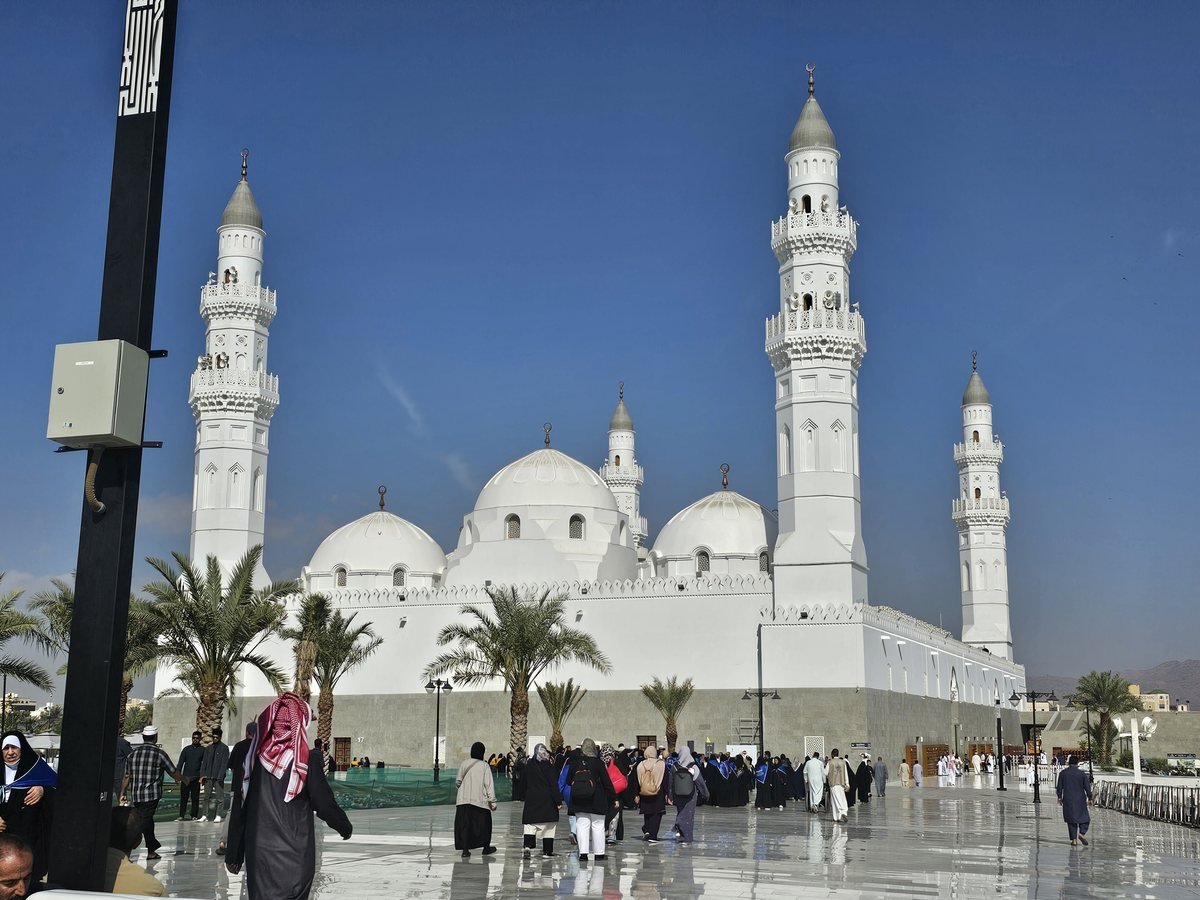
Umar ibn al-Khattab’s era, then Uthman (RA), then the Umayyads and Ottomans rebuilt and enlarged it over the centuries, and the Saudi era expansions turned it into the large white mosque visitors see today, with its distinctive minarets and courtyards able to hold many thousands of worshippers.
Through every rebuilding, the site and the qibla wall stand where the Companions first prayed.
Is Praying in Masjid Quba Equal to Umrah?
Yes — this is one of the best-known and most authentic virtues of any place in Madinah. The Prophet ﷺ said: “Whoever purifies himself in his house, then comes to the Quba Mosque and prays in it, he will have a reward like that of Umrah” (Ibn Majah).
Another narration promises the reward of “a complete Umrah” (Tirmidhi). Two details in the wording matter for your visit. First, the purification is done “in his house” — so make your wudu at your hotel before you leave, and keep it until you pray.
Second, the prayer itself is simply two rak’ahs; any prayer in the mosque counts, but most visitors pray two rak’ahs of nafl with the intention of the Quba prayer as soon as they arrive.
The Prophet ﷺ himself used to go to Quba every Saturday, sometimes riding and sometimes walking, and pray two rak’ahs there (Bukhari and Muslim) — which is why Saturday mornings are the busiest time at the mosque, full of Madinah residents keeping the same habit fourteen centuries later.
Join them if you can; if your schedule is tight, any day brings the same reward.
How to Pray the Two Nafl in Masjid Quba
There is no special formula, and that simplicity is the point. Make wudu at your accommodation.
Travel to Quba — the mosque is about 3.5–4 km south of Masjid al-Nabawi, roughly ten minutes by taxi, and it is the first stop on most ziyarat tours, including the route in our full Ziyarat in Madinah guide.
Enter with the etiquette of any mosque, pray two rak’ahs of voluntary prayer, and make dua. If your visit falls at a prescribed prayer time, praying the fard congregation in Quba also fulfils the promise, according to many scholars.
Women have their own prayer areas and entrances, and the mosque is fully accessible, with wheelchairs available at the gates.

What Else to See Around Quba
The Quba district is the oldest quarter of Madinah, and a slow half hour here repays the walk. The date-palm groves that surrounded the first mosque still fringe the neighbourhood.
A short distance north stands Masjid al-Jumu’ah, where the Prophet ﷺ prayed the first Friday prayer on his way into Madinah — many ziyarat rounds stop there on the way back.
And in Quba itself, the well of Aris (Bir al-Khatim), where the Prophet’s ﷺ ring later fell during Uthman’s caliphate, is pointed out near the mosque.
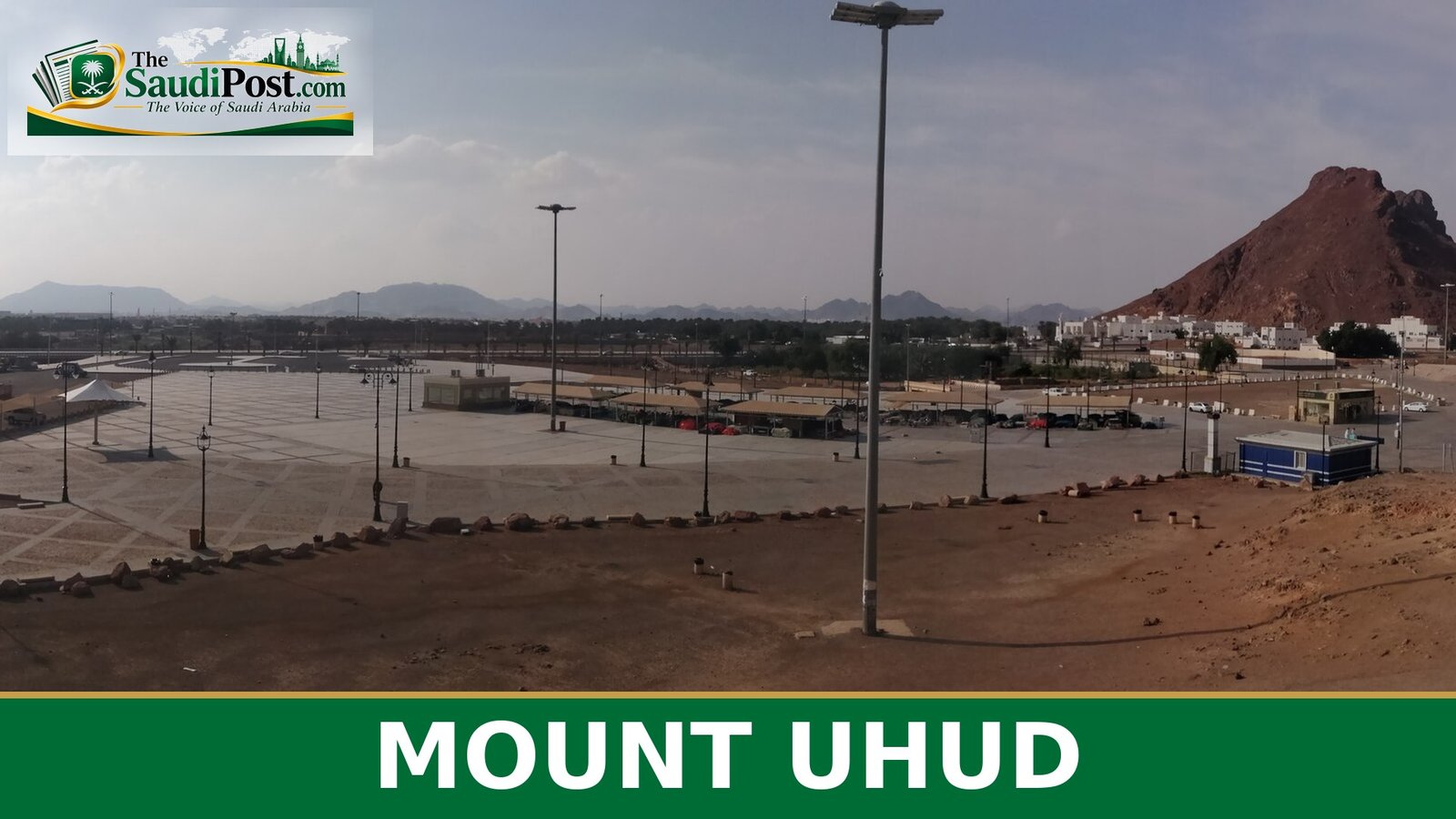
From Quba, most visitors continue north to Mount Uhud — the two stops frame the Madinan story: the mosque that began it, and the battlefield that tested it.
Related Guides
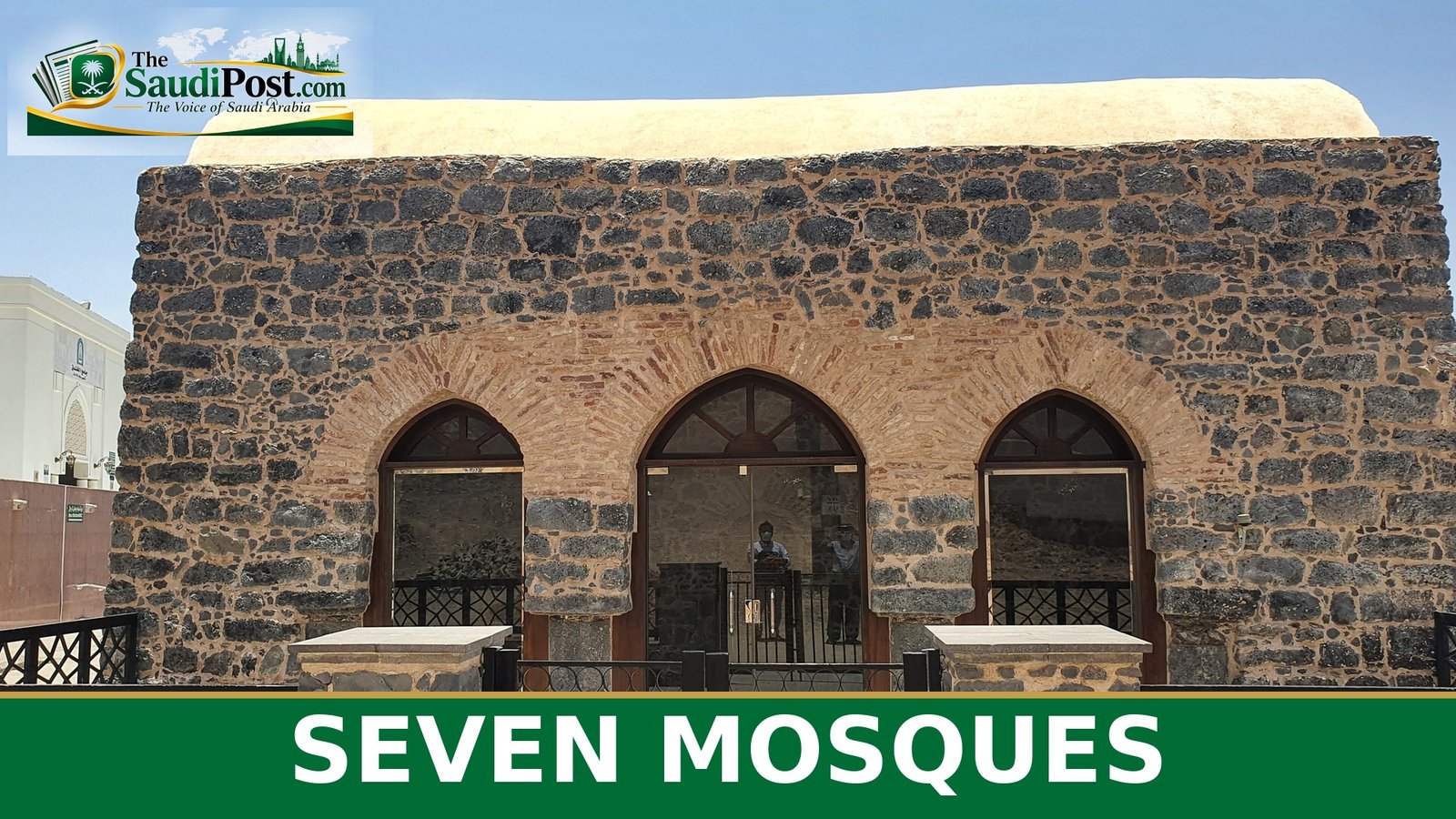
- The Seven Mosques of Madinah: Al-Masajid as-Sab’ah Explained
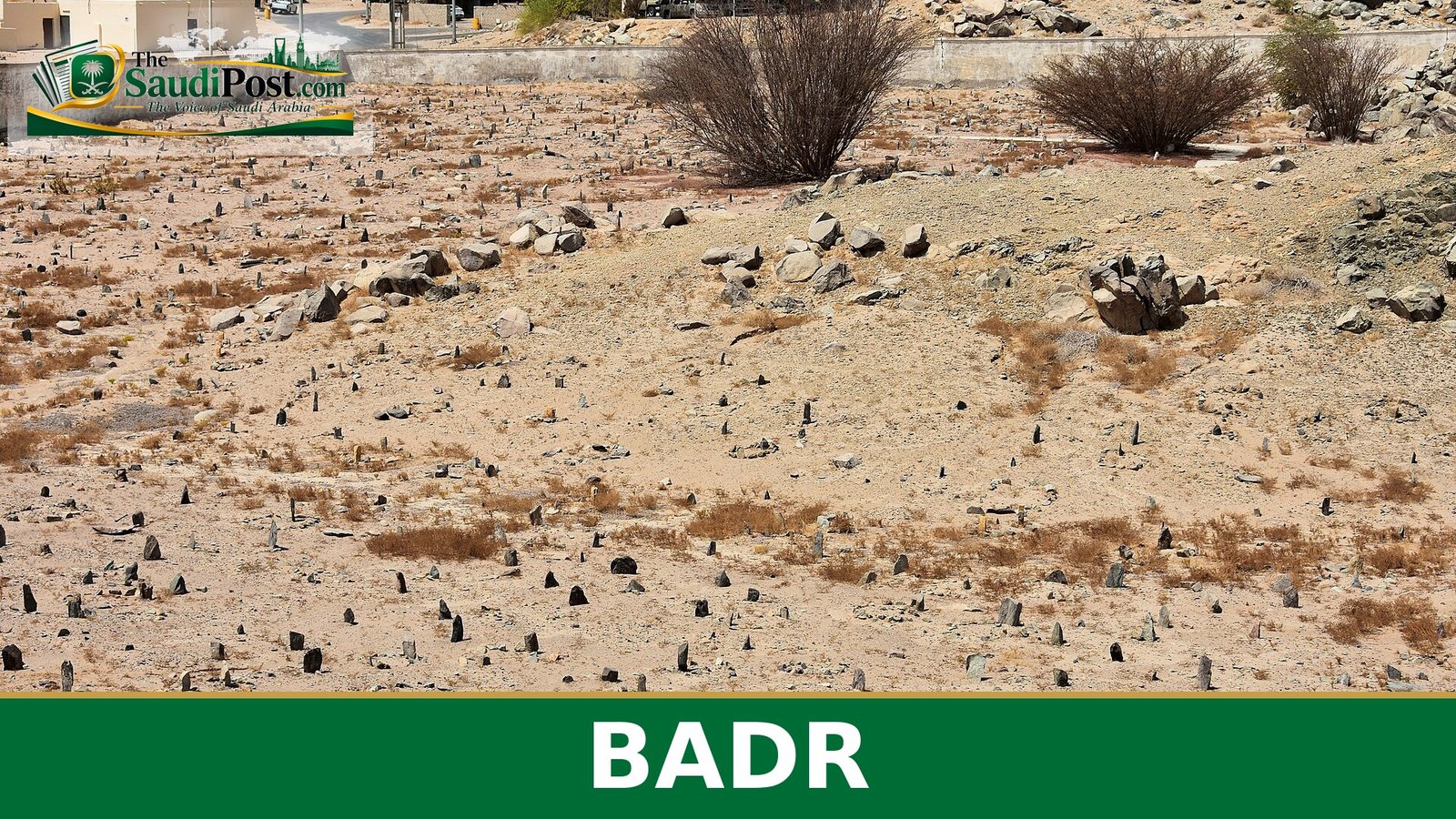
- Badr: The Battlefield of Islam’s First Great Victory
- Battle of the Trench: How a Ditch Saved Madinah (Ghazwat al-Khandaq)
Frequently Asked Questions
What is so special about Masjid Quba?
Masjid Quba is the first mosque built in Islam, founded by the Prophet ﷺ on his arrival in Madinah in 622 CE. The Quran praises it as a mosque “founded on righteousness from the first day” (9:108), and praying two rak’ahs in it carries the reward of a complete Umrah.
Is praying in Masjid Quba equal to Umrah?
Yes. The Prophet ﷺ said that whoever purifies himself in his house, then comes to Masjid Quba and prays in it, receives a reward like that of Umrah — described in another narration as a complete Umrah (Ibn Majah; Tirmidhi). The reward is in merit, not a substitute for the rites of Umrah itself.
What did the Prophet say about Masjid Quba?
Besides the Umrah-reward hadith, the Prophet ﷺ used to visit Quba every Saturday, riding or walking, and pray two rak’ahs there (Bukhari and Muslim). The Quran also commends the mosque and its people: “In it are men who love to purify themselves, and Allah loves those who purify themselves” (9:108).
Which is the first masjid in the world?
Masjid Quba is the first mosque built in Islam — the first mosque established by the Prophet Muhammad ﷺ, in 622 CE. (The very first house of worship for mankind, the Quran says, is the Kaaba in Makkah — “the first House established for mankind” (3:96) — but Quba is the first mosque of the Prophet’s ﷺ community.)
How do I pray the two nafl in Masjid Quba?
Make wudu at your hotel before leaving — the hadith specifies purifying oneself “in his house”. At the mosque, pray any two rak’ahs of voluntary prayer with a sincere intention, then make dua. There is no special surah or formula prescribed; praying the obligatory prayer in congregation at Quba also counts, according to many scholars.

One thought on “Masjid Quba: The First Mosque in Islam and the Umrah Reward”