




Saudi Arabia is much bigger than most visitors expect. It stretches from the Red Sea in the west to the Gulf in the east, and from the Jordanian border in the north to Yemen in the south.
This guide covers the places that matter most to a first-time visitor. It starts with the six city guides in this cluster, then adds the holy cities, the desert wonders and the practical facts you need before you go.
| Quick Facts — Places to Visit in Saudi Arabia | |
|---|---|
| Capital | Riyadh — the largest city and the political and business centre |
| Regions | 13 administrative regions — Najd, Hejaz, Asir, Eastern Province and the North |
| Currency | Saudi riyal (SAR); time zone AST, UTC+3, no daylight saving |
| Best time to visit | November to March for most of the country; June to September only for the Asir highlands |
| Tourist eVisa | One year, multiple entry, up to 90 days in total — apply at visa.visitsaudi.com (72 eligible countries) |
| UNESCO sites | Eight World Heritage sites, from Hegra (2008) to Al-Faw (2024) |
| First trip length | 10 to 14 days is the usual recommendation for a first visit |
The Six Cities in This Guide
This cluster covers six city guides, one per city. Each guide stands on its own, with the top places, the best time to go and the practical details for that city.
Riyadh is the capital and the biggest city. Jeddah is the Red Sea gateway and the most cosmopolitan city in the Kingdom. Dammam and Khobar are the Gulf coast cities, built on oil and trade.
Abha and Taif are the cool mountain cities of the southwest and west. Tabuk is the wild northwest, with canyons, snow-capped peaks and a long Red Sea coast. Together, the six cover every side of the country.
| The Six City Guides | |
|---|---|
| Riyadh | Diriyah, Masmak Fort, National Museum, Kingdom Centre, Edge of the World — see our places to visit in Riyadh guide |
| Jeddah | Al-Balad, the Corniche, King Fahd’s Fountain, teamLab Borderless — see our places to visit in Jeddah guide |
| Dammam & Khobar | Ithra, the Corniches, Half Moon Bay, SciTech — see our places to visit in Dammam and Khobar guide |
| Abha | Green Mountain, Jabal Sawda, Rijal Almaa, Al Habala — see our places to visit in Abha guide |
| Taif | Rose farms, Al Hada cable car, Shubra Palace, Al Shafa — see our places to visit in Taif guide |
| Tabuk | Tabuk Castle, Wadi Al Disah, Jabal al-Lawz, Red Sea coast — see our places to visit in Tabuk guide |
Riyadh — the Capital
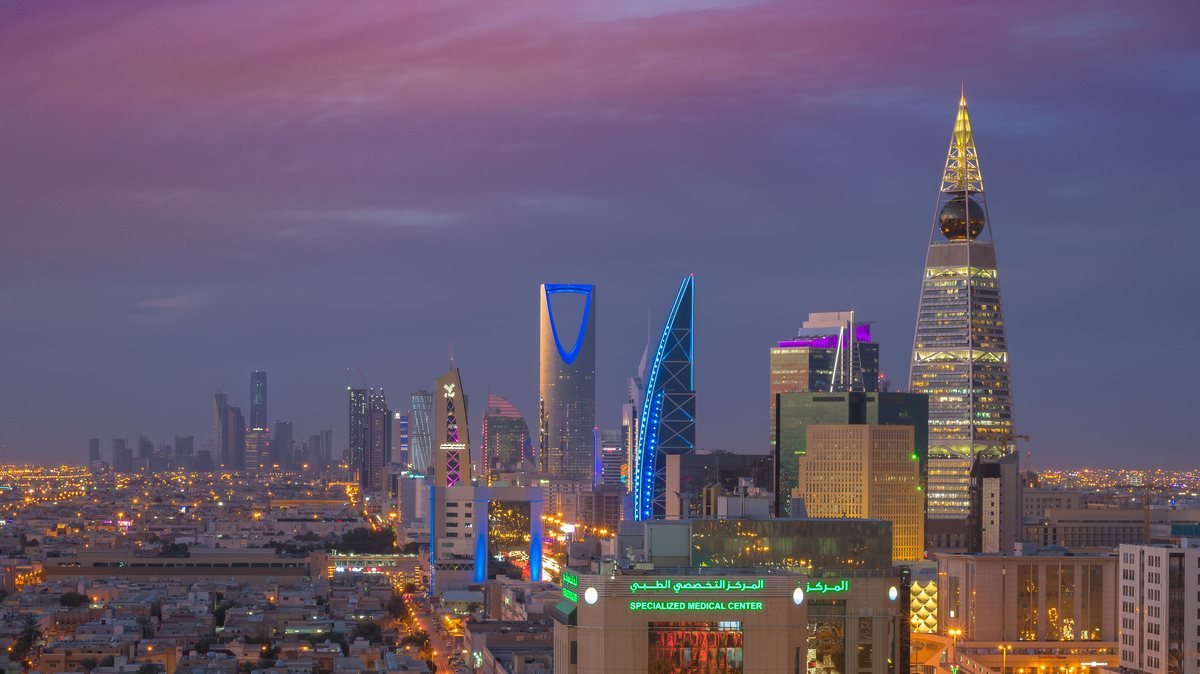
Riyadh is where modern Saudi Arabia began. The Masmak Fort in the old city is where the Kingdom’s unification started in 1902, and the National Museum tells the full story from prehistory to today.
The city is also where the new Saudi Arabia is most visible. Diriyah, just northwest of the capital, is the mud-brick birthplace of the First Saudi State and a UNESCO site. The King Abdullah Financial District (KAFD) shows the other side — glass towers, a striking metro station and late-night cafés.
Day trips matter here too. The Edge of the World, about 90 miles out, is a 300-metre cliff with views over dunes and plains. VisitSaudi recommends going with a tour operator, and that is the sensible way to do it.
Jeddah — the Red Sea Gateway
Jeddah is the port city that has welcomed travellers for centuries. It is the gateway to Makkah, and its historic district, Al-Balad, is a UNESCO site full of coral-stone houses and latticed wooden balconies.
The city is best at the water. The Corniche runs for 30 kilometres along the Red Sea, and the King Fahd Fountain — the tallest in the world at 312 metres — lights up after dark. Al-Balad is free to explore, and its souqs still sell spices, gold and incense.
Jeddah is also the easiest base for the Haramain train. Our guides to Haramain train booking and Jeddah airport to Makkah taxi fares cover the onward journey in detail.
Dammam and Khobar — the Gulf Coast
The Eastern Province is where Saudi oil began, and the three cities of Dammam, Khobar and Dhahran grew into one metropolis around it. The star attraction is Ithra, the King Abdulaziz Center for World Culture in Dhahran.
Ithra holds a museum, a library, a cinema and a theatre under one striking roof. It is closed on Sundays, so check ithra.com for the day’s hours before you go. The Children’s Museum and the Energy Exhibit close two hours before the rest of the centre.
The coast is the other half of the visit. The Dammam and Khobar Corniches are palm-lined promenades that come alive after sunset, and Half Moon Bay, about 30 kilometres south of Khobar, is the calm, shallow beach the whole region uses on weekends.
Abha and Taif — the Cool Highlands
When the rest of the country hits 45 degrees, Saudis head for the mountains. Abha sits at about 2,270 metres in the Asir highlands, and summer highs there stay around 23 to 25 degrees. It is the country’s summer escape.
Abha’s icons are the Green Mountain, lit green at night, and Jabal Sawda, the peak long counted as the Kingdom’s highest at around 3,000 metres. The stone tower village of Rijal Almaa, about 45 kilometres west, is one of the most photographed places in the country.
Taif plays the same role for the west. It sits at about 1,880 metres above Makkah, and it is the City of Roses — 900 farms grow the 30-petalled damask rose. The harvest runs for about 45 days from late March, and the Rose Festival follows in April.
Tabuk — the Wild Northwest
Tabuk is the least visited of the six, and the most dramatic. The region holds the 15-kilometre sandstone canyon of Wadi Al Disah, the snow-capped Jabal al-Lawz at 2,549 metres, and about 700 kilometres of Red Sea and Gulf of Aqaba coastline.
Tabuk city itself is the gateway. Its 16th-century castle once protected pilgrims on the Damascus to Makkah route, and it now holds a small museum. From the city, the canyon, the coast and the mountains are all day trips by car.
One warning matters: Wadi Rum is across the border in Jordan, not in Tabuk. The two landscapes look alike, and guides mix them up. Tabuk’s own canyons need no comparison — Wadi Al Disah stands on its own.
Makkah and Madinah
No guide to Saudi Arabia is complete without the two holy cities. Makkah and Madinah are the heart of the country for Muslims, and our site already covers them in depth.
Our ziyarat in Makkah guide covers the holy places around the Haram, from Cave Hira to Mount Arafat. Our ziyarat in Madinah guide covers Masjid Quba, Mount Uhud and the Seven Mosques.
Non-Muslim visitors should know the rule clearly. Non-Muslims are not allowed in Makkah, and they cannot enter the Prophet’s Mosque or its courtyard in Madinah. They can visit Madinah city itself, and everywhere else in the country.
AlUla and the UNESCO Sites
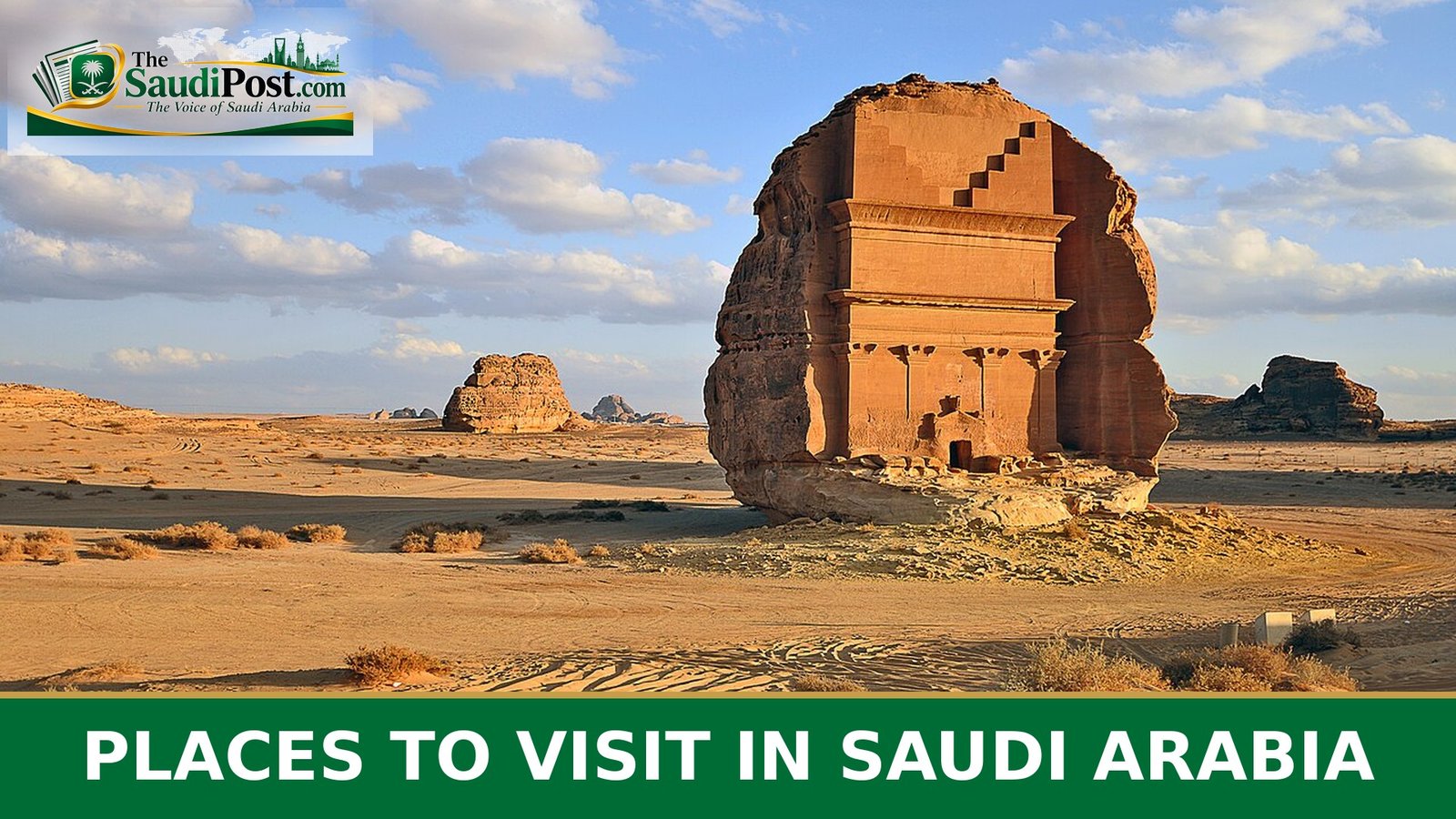
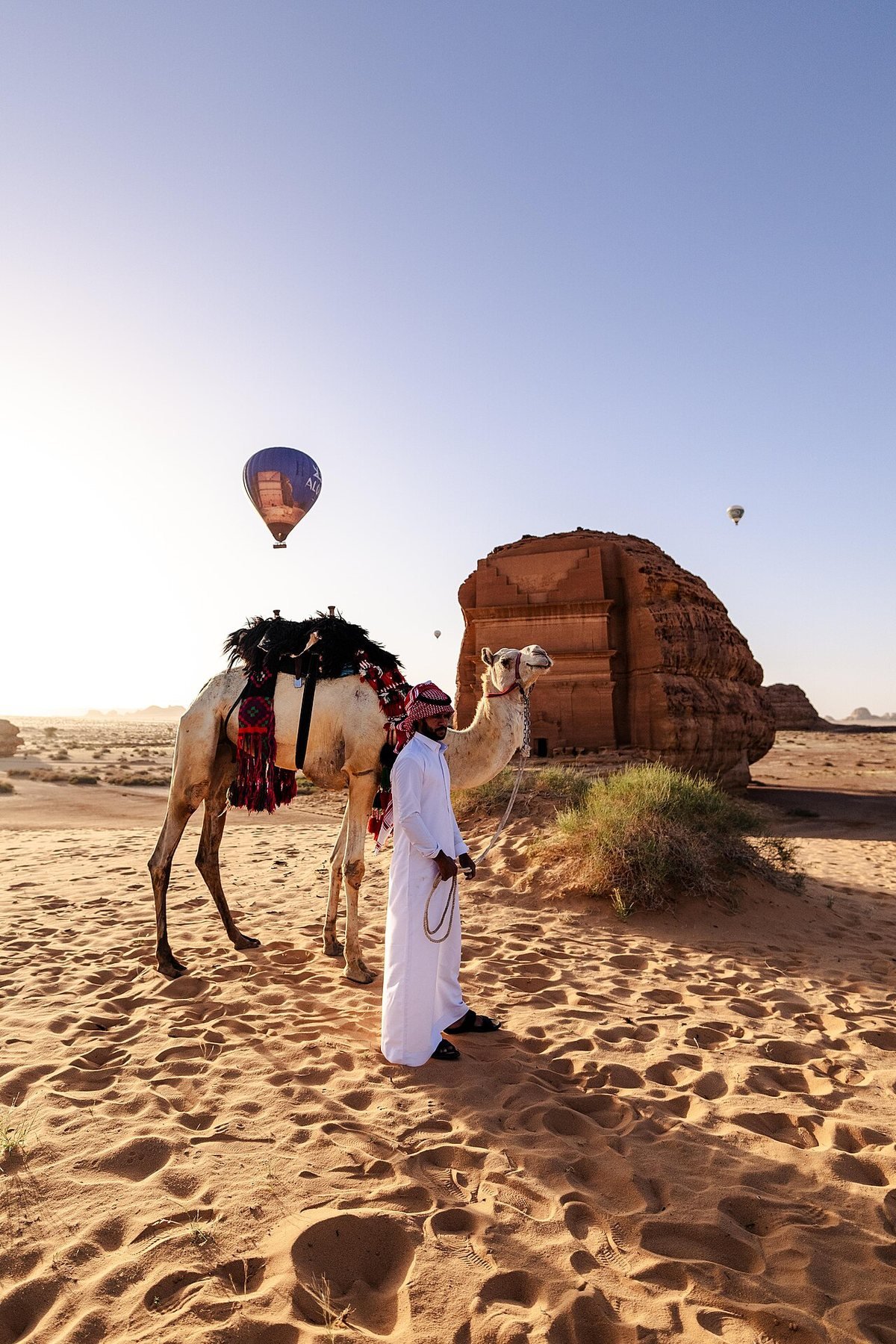
Saudi Arabia has eight UNESCO World Heritage sites, and the most famous is Hegra, also called Mada’in Saleh. It was the first Saudi site inscribed, in 2008, and its carved Nabataean tombs are the southern sister of Petra.
The Qasr al-Farid tomb in the photo below is the most photographed of them all — a single rock carved into a tomb, standing alone in the desert. Hegra is reached from AlUla, which also holds an old town, oasis farms and desert canyons.
The other UNESCO sites spread across the country. At-Turaif in Diriyah and Historic Jeddah are covered in the city guides above. The rest — the Rock Art of Hail, the Al-Ahsa Oasis, the Hima Cultural Area, the ‘Uruq Bani Ma’arid desert reserve and Al-Faw — reward a longer trip.
When to Visit Saudi Arabia
November to March is the main season for most of the country. Days run around 20 to 30 degrees inland, nights are cool, and the outdoor season — including Riyadh Season — runs in these months.
Summer is different. From June to September, the lowlands are best avoided, with inland temperatures regularly above 45 degrees. The exception is the highlands: Abha and Taif stay cool, and that is when Saudis go there.
The Red Sea has its own calendar. Diving is best from late March to mid-May, when the water is 26 to 28 degrees and visibility is at its best. It is good year-round, but those weeks are the peak.
| Best Time by Region | |
|---|---|
| Riyadh & Jeddah | November to March — mild days, cool nights, outdoor season |
| Dammam & Khobar | October to April — corniche evenings, Khobar Season |
| Abha & Asir | June to September — summer escape, highs around 23–25 °C |
| Taif | March to May for the roses; September to November for cool, dry weather |
| Tabuk | October to March — mild days; December to February for snow on Jabal al-Lawz |
| Red Sea diving | Late March to mid-May — water 26–28 °C, best visibility |
Getting Around Saudi Arabia
The country is huge, so fly between regions. Saudia has the widest domestic network, with flynas and flyadeal as the low-cost options. Riyadh to Jeddah takes about 1 hour 10 minutes by air.
Between Makkah, Jeddah and Madinah, take the Haramain train. It runs 450 kilometres at up to 300 kilometres per hour, and Makkah to Madinah takes about 2 hours 20 minutes. Book only on the official site, sar.hhr.sa.
Inside Riyadh, the metro is the new option. It has six driverless lines and 85 stations, and it links the airport, KAFD, Olaya and the National Museum. Plan journeys on the Darb app. In other cities, Uber and Careem work well, and a rental car is the practical choice for day trips.
Do You Need a Visa?
Citizens of 72 countries can apply online for a Saudi tourist eVisa at visa.visitsaudi.com. It is a one-year, multiple-entry visa that allows up to 90 days in the country in total during that year.
Read that carefully: the 90 days are a total across the year, not 90 days per visit. Leaving and re-entering does not reset the count. The eVisa covers tourism, events, family visits, leisure and Umrah — but not Hajj, which needs a separate Nusuk visa and permit.
The fee is around SAR 535 in total, including mandatory medical insurance, according to 2026 guides. The official portal does not show the fee on its homepage, so confirm the live fee during the application itself. A visa on arrival is also available at airports for the same eligible nationalities.
Frequently Asked Questions
What is the best time to visit Saudi Arabia?
November to March for most of the country, with mild days of 20 to 30 degrees. June to September suits only the Asir highlands — Abha and Taif — where summer highs stay around 23 to 30 degrees.
Do I need a visa, and how long can I stay?
Citizens of 72 countries apply online at visa.visitsaudi.com for a one-year, multiple-entry eVisa. It allows up to 90 days in total during the one-year validity — not 90 days per visit. Umrah is allowed on it; Hajj is not.
Can non-Muslims visit Makkah and Madinah?
No, not Makkah — non-Muslims are not allowed in the city. In Madinah, non-Muslims can visit the city but cannot enter the Prophet’s Mosque or its courtyard. Everywhere else in the country is open to them.
How do I travel between Saudi cities?
Fly for long distances — Riyadh to Jeddah takes about 1 hour 10 minutes. Take the Haramain train between Makkah, Jeddah and Madinah (about 2 hours 20 minutes end to end, book at sar.hhr.sa). Inside cities, use the Riyadh Metro, Uber or Careem, or a rental car.
How many days do I need for a first trip to Saudi Arabia?
Ten to 14 days is the usual recommendation: two to three days in Riyadh, two in Jeddah, three in AlUla, plus one more region such as Asir or the Eastern Province. Pilgrims add Makkah and Madinah on top of that.


